On God & Emotional States
Wm. Halim Breiannis
September 8, 2025
On God and Emotions 1
الرحيم الرحمن اهلل بسم
We begin by praising God Who created man in the best of forms that we may know
Him; and we send the best benedictions and peace upon those whom we call Prophets
and messengers including Noah, Abraham, Moses, Christ Jesus, and the Seal of
Prophethood, Muhammad ملسو هيلع هللا ىلص. To proceed:
In this paper, the aim is to explore one of the seemingly clear differences between the
Christian and Muslim perceptions of God. While it is a fundamental conviction of my own
that God is absolutely One, I also acknowledge that perceptions amongst different belief
systems, and even individuals within those systems, differ. While God in His essence is
perfectly singular, mankind’s understandings regarding Him are diverse. Having said that, I
am also certain that the findings of Father Wilhelm Schmidt were sound and that,1
regardless of the time, place, language, culture, or creed of any faith group, they all began
in their origin as monotheistic and can be traced back, even in our own time, to that
fundamental root.
From the fundamental differences between the Christian and Muslim concepts of God
is the understanding of Monotheism itself. For the Muslim, this is very clear and
straightforward: God is absolutely One, without parts, partner, equal, or likeness;
simultaneously Transcendent and Immanent. For the Christian, on the other hand, God is
one essence with three identities or personalities. He is simultaneously Father, Son, and
Holy Ghost. Put another way, God is the Originator, the Logos as Redeemer, and the
Comforting Spirit that guides, each role having its own identity while remaining part of a
singular essence. What is more, despite the terms such as Father/Son or Creator/Word
(Logos) or even “Spirit”, the Christian concept affirms that God is pre-eternal and eternally
As established and expounded upon in his “The Origin and Growth of Religion – Facts and Theories”,1
translated by H.J. Rose. Wilhelm Schmidt was a Priest, linguist, ethnologist and a historian. He studied regions
around the world and wrote extensively on this topic. His work, originally in German, has been translated into
several languages and has become a critical study for those in the field of comparative religion.
On God and Emotions 2
ever-lasting – with no beginning or end – and hence, they espouse that all three “aspects”
of God are equal in their eternality – no part having preceded the other.
This difference regarding the concept of monotheism itself begins to spread wider as
the Christian concept allows for two things that are rejected by Islamic theology – it affords
God to indwell in the creation, becoming, as it were, a created being himself and too, it
affords a concept of change for God. In Islamic theology, God is absolutely perfect and, as
such, does not change, has no need at all (ever), and is beyond ever being described with
imperfection, defect, or deficiency of any kind. For the Muslim, God is as He ever was.
As an example, the Islamic understanding of God rejects for God learning. He is
perfectly Omniscient and has been for eternity, since before even the first of creation was
brought into being. He has always known what is, what would be, what would never be,
and every possibility – simultaneously and without any deficiency in that knowledge. Thus,
God has no ability to “learn” as He has always known, and there is no way to enhance,
diminish, or conceal anything of His knowledge.
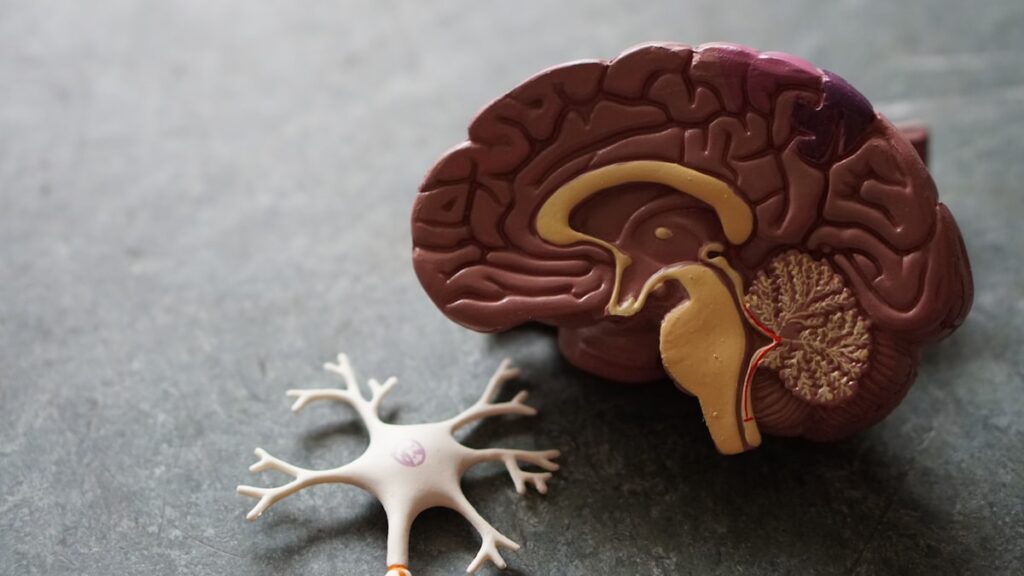
This puts us in a great place to segue into the topic of emotions . Emotions are2
fundamental aspects of human experience, intricately woven into our biological makeup.
They are not merely fleeting feelings but are deeply rooted in complex neurochemical and
hormonal processes that distinguish humans from other living beings. While many animals
and even simple organisms respond to stimuli in ways that suggest a form of feeling or
reaction, the depth, complexity, and conscious experience of emotions set humans apart.
We witness insects (for example) exhibiting behaviors that suggest they experience
feelings such as fear, joy, or pain, but it is not accurate to assume that every living, animate
creature has a conscious emotional life. They may react to stimuli in predictable ways, but
these responses are more akin to instinctual reflexes than feelings. As a result, attributing
emotions to such organisms is anthropomorphic and scientifically unsupported. Despite
for further research on emotions I suggest Richard J. Davidson’s 2003 paper, “The Nature of Emotions: A2
Review”, Joseph LeDoux’s 2012 paper, “The Physiology of Emotion”, and Magda B. Arnold’s 1960 classic,
“Emotion: A Psychoevolutionary Synthesis”.
On God and Emotions 3
responses to stimuli that suggest emotional reactions, several factors influence whether an
organism can be said to have emotions or not. These include its neurological complexity,
evolutionary adaptations, and cognitive capacities.
Emotions involve a dynamic system of brain activity, physiological changes, cognitive
assessments, and behavioral expressions, working together to produce the full spectrum
of human feelings. Emotions are complex processes. The brain’s limbic system, particularly
the amygdala, plays a central role in detecting emotional significance and initiating the
response. Once activated, the amygdala signals other brain regions, such as the prefrontal
cortex, to assess the situation and determine appropriate reactions. Neurotransmitters,
chemical messengers in the brain, play a central role in emotional regulation. For example,
dopamine is associated with pleasure and reward, low levels of serotonin are commonly
associated with depression and anxiety, and norepinephrine is involved in alertness and
arousal. Add to these neurotransmitters are hormones secreted by endocrine glands. Our
hormones significantly impact emotions such as the release of adrenaline (epinephrine)
during stressful situations and the release of cortisol during stress. These chemicals and
hormones do not act in isolation; they interact within complex neural circuits, influencing
our emotional experiences as well as our physiological responses.
Physiologically, emotions trigger the autonomic nervous system. This leads to
observable physical changes such as an increased heart rate, rapid breathing, and
sweating when one feels fear or warmth and blushing when one is embarrassed. When we
experience an emotion, a cascade of neurochemical and hormonal changes occurs,
influencing both our mental state and physical reactions.
Still, there is also the cognitive aspect of emotions that is crucial in shaping the
experience itself. How a person interprets an event (or the story/meaning they give it) will
affect how they respond emotionally, and that will be based on their perceptions, beliefs,
and past experiences. It is for this reason that two people experiencing the same event
may have very different emotional reactions.
On God and Emotions 4
These aspects, the neurological (neurotransmitters and hormones), physiological, and
cognitive, work together to produce the rich myriad of human feelings and reactions.
Emotions are intricate, multifaceted phenomena that encompass subjective feelings,
physiological responses, cognitive appraisals, and social signals. Emotions are complex
psychological and physiological states that arise in response to internal or external stimuli
and are fundamental to the human experience, shaping our thoughts, behaviors, and
interactions with the world around us and thus serve to motivate actions.
This last point, the motivation of actions, is important to remember moving forward as
we tend to describe behaviors as emotions, often confusing the two as one and the same.
We can observe that plants and insects respond to their environments— plants bend
toward light, and insects react to threats or food sources— but neither plants nor insects
possess the neural structures or consciousness necessary for experiencing emotions .3
Their behaviors are responses, not emotions. To attribute emotions to either is
anthropomorphic and unsupported.
If one were to ask, “What is the purpose of emotions?”, I would respond that emotions
influence decision-making and behavior, motivating actions, and as such, the range of
emotions reflects the needs (purpose) of those who enjoy such processes. This is why we
may find that many higher animals (such as elephants, dogs, and monkeys), due to a
sophisticated nervous system, particularly the brain’s limbic system, benefit from
emotional experiences as well, albeit far from the rich tapestry of emotional experiences
shared by humans .4
Understanding this, I believe we can safely make seven very basic conclusions: 1)
Emotions are directly linked to the limbic system, 2) without a developed limbic system, a
living organism cannot possess emotional states, 3) emotions are elicited by
for research on emotions in plants, I suggest, “”Plant Neurobiology: A New Scientific Frontier” written by3
Stefano Mancuso and colleagues (2015). As for emotions and insects, I suggest Christina M. M.’s 2019, “Insect
Sentience and Consciousness”.
This can be reinforced by the findings in many papers, however, I suggest, “Feelings and Emotions in4
Animals” written by Jaak Panksepp (2011)
On God and Emotions 5
neurotransmitters and hormones, 4) emotions are affected by cognitive frames, 5)
emotions can be changed through external stimuli, 6) emotions change the physiology of
the one experiencing them , and 7) emotions elicit actions.5
If we can agree on these points, three important conclusions result from attributing
emotions to God: 1) God must have a physical body that reflects creation (possessing a
limbic system, a nervous system, neurological transmitters, and hormones), 2) God has
needs external to himself, and 3) God changes based on stimuli, whether that be external
or internal. This also entails an important logical conclusion – God can be emotionally
manipulated ( a point we will return to later). A person is absolutely free to disagree with
these conclusions. However, to do so would demand a new, different definition of and
explanation for emotions. It would demand on the reader a completely new framework
that no longer reflects what we call “emotions”. When we feel happiness, joy, fear, anger,
or sadness, these emotions color our perceptions, coloring our interpretation of events
and experiences, coloring our memories, and our “knowing”. In this way, emotions act as
filters that influence our reality, often distorting or amplifying our perceptions. This is what
emotions “do”. To claim this for God means that a person accepts all of the conclusions
that come with it while rejecting the conclusions that demand a complete reinterpretation
of what emotions are.
However, both the Christian and the Muslim would agree that their concepts of God
are based on their respective scriptures and not opinions. For this reason, when the6
Christian reads in the Bible, “The Lord regretted that He had made human beings on the
An important point not added above is that the prolonged experience of a given emotion can actually change5
the structure of the brain itself. Prolonged emotional experiences can also have effects of the physical
appearances as well as the physical functions (organs). Thus, emotions change themselves, they can be
changed and they have an altering effect of the one experiences them.
It is important to point out that this is especially true for the various sects of Protestants amongst the6
Christians due to their concept of Sola Scriptura (the Scripture alone is enough), however, it need not be
necessarily true for either the Eastern or Western Orthodox Churches. The reason for this is that the
Orthodoxies acknowledge that the Church came before the Creed and the Creed came before the Scripture.
Due to this, the Orthodoxies will often acknowledge that the Scripture (both Old and New Testament books)
serves as proof texts for their Creed rather than developing from it.
On God and Emotions 6
earth, and His heart was deeply troubled,” they believe this to mean three explicit things:7
1) God has a heart, 2) God’s heart was troubled (effected) by the sins of human beings, and
so 3) God regretted. This is similar to when they read what is said to be a quote by God, “I
regret that I have made Saul king, because He has turned away from Me and has not
carried out My instructions.” In this verse and the reiteration of it in 1 Samuel 15:35, God is8
said to have regretted His own decision to make Saul king because of Saul’s disobedience.
This idea is further enhanced by verses such as, “And the Lord repented of the evil which
He thought to do unto His people,” and, “God repented of the evil, that He had said He9
would do unto them; and He did it not.” ,10 11
When it is pointed out that there are other verses such as, “I, the Lord do not change.
So you, the descendants of Jacob, are not destroyed,” and, “Every good and perfect gift is12
from above, coming down from the Father of the heavenly lights, Who does not change
like shifting shadows,” which indicate an immutable, unchanging nature for God, the13
response is often along the lines that God’s nature is immutable and unchanging but His
divine responses of regret and repentance express His relational responses to the choices
and actions of man. We may also find that Christian scholarship will say that, since God
does not err so as to repent, this regret and repentance are manifestations of His Justice
and Mercy. In this interpretation, God’s essential nature, character, and promises do not14
change and hence, He is deemed immutable and yet, he also has genuine emotional
Genesis 6:67
1 Samuel 15:118
Exodus 32:149
Jonah 3:1010
It should be pointed out that the words Translated as “repent” in these verses are “nacham” (נָחַם) and11
“khanam” (חָנַם) which may mean to regret, to be sorry, to change one’s mind, or to relent. The translation used
does not change the overall point that we are making and so there is no need to go deeply into this matter.
Malachi 3:612
James 1:1713
Third Century scholar and Church Father Origen is the earliest to make this interpretation that God’s regret14
is a relational responses to mankind’s sin and was echoed after him by Augustine in the fifth century.
On God and Emotions 7
experiences (such as Joy, anger, and sadness) which are expressions of His relational
interaction with mankind.
While acknowledging the theological arguments and interpretations, I must remind
the readers that there remains, in these assertions, not just an anthropomorphizing of God
but also an inherent understanding that God felt sadness and regret for His own choices
and actions. There is an inherent understanding that God did not know a matter and only
later became aware, causing His repentance. There is an inherent understanding that the
acts of mankind directly affect God in a very real way. This means, for the Christian, that
while God’s essence (and His promises) are immutable, He suffers emotional states, like
humans, based on external stimuli. This is critical to the Christian position of God being a
personal and relational being who experiences a wide range of emotions, reflecting His
deep involvement with mankind; His having empathy and a responsiveness to human
actions and suffering which they deem necessary for them to have a deep and personal
relationship with Him.
In Islam, the concept of God differs. There is a Prophetic Narration in which God says,
“O My servants, all of you are liable to err except those whom I guide, so seek guidance of
Me and I shall guide you. O My servants, all of you are hungry except for those whom I
feed, so seek food of Me and I shall feed you. O My servants, all of you are naked except
for those whom I clothe, so seek covering from Me and I shall clothe you. O My servants,
indeed you commit sins by night and day, and none forgives sins but Me, so seek
forgiveness of Me and I shall forgive you.
O My servants, verily you are not able to harm Me and you cannot benefit Me. O My
Servants, if the first of you to the last of you, the human amongst you and the jinn , all15
together were to be as pious as the most pious heart of you all, that matter will not add to
My sovereignty in any way. O my servants, if the first of you to the last of you, human
The topic of jinn can be unfolded at great length but is outside the purview of this paper and so I will suffice15
it to say that they are a type of created beings which have both intellect and free will and are thus accountable
before God. They live in the same world in which we live but dwell on a frequency which man is not equipped
to see and hence, while mankind has experiences with these created beings, they dwell in a realm unseen by
us.
On God and Emotions 8
amongst you and the jinn, all together were as wicked as the most wicked heart of you all,
that would not reduce My sovereignty in the slightest.
O My servants, if the first of you to the last of you, the human amongst you and the
jinn, all together gathered in a single place and asked of Me and I fulfilled their every
request, that would not reduce what is with Me even the amount (of water) as a needle
dipped into the sea.
O My servants, it is your deeds which will be taken to account and for which I shall
recompense you. Therefore, whoever finds good, let him praise God in gratitude and
whoever finds other than that, let him blame no one but himself.”16
I shared this lengthy narration as it serves to establish the Muslim concept of both,
God’s imminence and His transcendence, His direct and responsive relationship with
mankind and His being far from being affected by the actions of created beings. God is at
once Adh-Dhaahir (The Apparent) and Al-Baatin (The Hidden)…eternally and perfectly.
In the Qur’an and Hadith (Prophetic Narrations), there are around 200 names
authentically attributed to God. These names can be divided into various categories such
as Names of Majesty (such as Al-Malik – the Sovereign) and Names of Beauty (such as Ar-
Raheem – the All-Merciful), or the Names of His Essence (such as Al-Ahad – the Absolutely
Singular) and Names of His Actions (such as Al-‘Afuw – the One Who Pardons). The Names
of His Essence are those names which cannot ever be attributed to God, while the Names
of His Actions are those names which, not only can the opposite be true, but it may very
well be that the opposite is also one of the Names of God – for example, Al-Qaabid (the
One Who Constricts) and Al-Baasit (the One Who Expands). For the Muslim, God is
simultaneously, eternally, and perfectly every one of these names and the attributes they
allude to. God is ever the Creator (Al-Khaaliq) eternally, even before He began the process
of creation.
This is a vigorously authenticated Hadith (Prophetic Narration) recorded in the Authentic collection of Imam16
Muslim.
On God and Emotions 9
Perhaps it seems like this was an excursion from the topic, but it is exceedingly
relevant. In Islamic theology, God is unchanging. He is as He ever was and eternally
possesses the Attributes of Perfection, having no defect or deficiency in any way. In fact,
one of the Divine Names of His Essence is “Al-Qudoos” – meaning that He is Absolutely
Pure and Holy and that He is completely free of any imperfections. Creation has certain
qualities or attributes that are shared universally, whether we look at subatomic particles,
entire galaxies, and everything in between. Every created thing has a beginning, a
potential end, and it is contingent. Every created thing is made up of frequency and
vibration. It dwells within the confines of time and space and mutually is affected and
affects. This is the nature of all physical matter, mass, and energy. Due to this, every
created thing changes and is continually changing, ceaselessly. God is the Creator of
creation and is not a created being Himself. He is not matter so as to share any of these
qualities with created beings but rather, He is the One Who created “the world” with these
innate qualities. God, on the other hand, is eternally and perfectly as He is.
For the Muslim, the key to knowing God is fourfold – 1) through knowing the names17
and attributes by which He has described Himself, 2) through observing and reflecting on
the world around us in light of these names , 3) through observing and reflecting on18
ourselves, in every aspect of what that means, in light of those names, and 4) by building a
relationship with Him in accordance with those names (for example – He is “Al-Ilaah” – The
God – and hence He has the right that He be prayed to and worshipped). It is through
There are alternate means that can be mentioned and I have focused on these four specifically for the17
purposes of this work. Personally I prefer the 8 avenues elaborated upon by the great West African scholar, Dan
Tafa, Abdul Qadir Ibn Al-Mustafa At-Turoodi in his book, “Ma’rifatu-l-Haqq” – 1) it is part of our primordial nature
to know Him, 2) it is the purpose of our intellect that it be used to know Him, 3) we know Him through
transmitted knowledge, 4) contemplation of His Majesty throughout creation, 5) contemplation of His Beauty
throughout creation, 6) the Qur’an, 7) the Prophetic Teachings, and 8) direct Spiritual Experience.
My point here is only to say that I do not believe that the four points that I mentioned are the only four ways nor
is my intention to establish some false limit.
This is a fundamental reason why science is so deeply encouraged in the Qur’an and in Islam as a whole. It is18
through science that one comes to a deeper recognition of, gratitude to and devotion towards God.
On God and Emotions 10
knowing Him, through contemplation and through devotion that the Muslim believes that19
a direct and dynamic personal relationship with God is established and maintained.
Again, this may all seem like a digression, but it is not. It serves to establish the key
fundamental belief of the Muslim that God is at once perfectly transcendent and perfectly
imminent. But now one may ask, “what does this have to do with emotions— which, after
all, is part of the main topic of this paper?” This question would be well placed and allow
us to point out the critical point of Islamic theology relevant to this paper. By discussing
the Names of God, the Muslim comes to understand His essence, His actions, and His
attributes. Those names are inseparable from their meanings, but those meanings are not
understood in an anthropomorphic way, likening God to His creation, but always in light of
His absolute perfection . Understanding this, for the Muslim, “the names of God are taken20
only as considerations of outcomes— which are actions— and not of inceptions, which are
affects.” . What this means specifically is that God is not affected or effected by any21
external stimuli; He does what He wills as He wills with perfect volition, according to His
perfect knowledge and wisdom . In light of this, when God says that He is Al-Wadood (the22
Loving and the Source of all love), the Muslim does not understand this as the emotional
state of love but rather, love is part of the essence of God; it is from His attributes and His
In Islam God is understood as Absolutely Unique and incomparable to anything else at all. There are so many19
things the human mind is ill equipped to fathom within the world itself – so the question then becomes, how
how does man expect to fathom the creator of all creation. Due to this, the concept of “Knowing God” in Islam
has an aspect of recognition of the inability to know Him by His essence. Instead, the Muslim will observe,
reflect and ponder over the creation in light of God’s Names. The entire world is but signs of God for the
Muslim, manifestations of God’s actions and attributes in every moment and so, it is not through His
unknowable essence but through contemplating the signs of God throughout our lives that man comes to
know Him.
Perfection must be understood well by the reader. When we say absolute perfect it entails 100% without20
even a fraction of deficiency. One may use the term “perfect” to mean a relative perfection, where some minor
deficiency is overlooked, but this is not what is meant when we speak of the Divine. Rather, we mean absolute
perfection and as such, it does not change. There is no room for improvement, there is no need for lateral
movement and any decrease leads to deficiency. As such, when we say that God is absolutely perfect it
inherently entails that He does not change.
This is a direct quote from “the Lights of Revelation”, a commentary of the Qur’an written by Imam Al-21
Baydāwi (14th century CE) and translated by Sheikh Gibril Haddad. This quote is from the commentary on the
Opening Chapter of the Qur’an (Al-Fatiha) in relation to God’s Anger.
For the Muslim, God neither has to reward piety nor punish wickedness, He is under no compulsion but22
rather acts according to His perfection and not the expectations man may wish to impose upon Him.
On God and Emotions 11
actions. It is seen in the outcome or actions of love, not the emotional changes triggered
by external stimuli.
It is according to outcomes, not emotions, that God’s pleasure, His joy, His love, His
anger, and His wrath are understood. When God says that He loves piety, it is understood
that those who act piously are drawn near to Him; when He says that wickedness is
abhorred, it is understood that those who do so are distanced from Him. What, in humans,
are recognized as emotional states are understood in relation to actions when it comes to
God. This becomes critical in understanding man’s relationship with God as it is not that
God changes His state based on the actions of man, but rather, it is the actions of man that
change their states with God. God is ever The Loving (Al-Wadood) and ready to accept the
sincere repentance of man (He is At-Tawwaab), but man has free will to choose whether or
not to draw themselves nearer to god or to distance themselves from Him.
God is not influenced or affected by the obedience or disobedience of mankind. God
is not somehow “motivated” by the actions of man. On the contrary, the consequences of
one’s doing right or doing wrong are always there, forever. God has already promised the
reward for good deeds and the penalty for ill deeds and given man ways out of the23
consequences of their errors. Those promises and their outcomes do not change based on
God’s feelings in that moment. This is, perhaps, the core statement of this entire work – In
Islam, God is not influenced, affected, or motivated by any external stimuli at all, not even
the deeds of mankind.
There is another Sacred Prophetic Narration that I will share to drive a point home, this
point being, it is man’s choices that affect their relationship with God as God is ever ready
to receive them. The Prophet Muhammad ملسو هيلع هللا ىلص, in a vigorously authenticated narration, said
It is important to point out the “good” and “bad” are broad generalities and different deeds are of different23
measures and too, those measures are directly effected by the intentions and sincerity (or lack thereof) of the
one doing that deed. While a group of people may all pray together, they are not all the same in that same
prayer. Similarly, if a group of people went out and robed a place together, they are not all the same in that
same heist. While we may judge them similarly in this world, their ultimate Judgement is with God alone as He
alone knows the hearts of man.
On God and Emotions 12
that God says, “I am as My servant thinks of Me, and I am with him as he remembers Me. If
he remembers Me to himself, I will remember him to Myself, and if he remembers Me in an
assembly, I remember him in an assembly better than his. If he draws near Me by a span, I
draw near him by a cubit, and if he draws near Me by a cubit, I draw near him by the space
of outstretched arms. If he walks towards Me, I rush towards him.” Man’s experiences with24
God in this world have to do with their perception of Him, and if one wants nearness to
God, they need only to turn to Him. The more one yearns for God and seeks to enhance
their relationship with Him, the swifter He will draw them near to Him. It is not God Who is
changing but the individual who chooses whether to expose themselves to the pleasure or
displeasure of God. God is ever ready to accept one’s repentance and forgive them their
transgressions.
This paper has not been meant to deny the deeper theological positions amongst
Christian scholarship. It is not meant to overlook the deeper theology or philosophy of the
Orthodox Church or those who have benefited from it. The overarching theme of this
paper is to demonstrate one of the outwardly clear differences between the Christian and
Muslim perceptions of God, exploring the immutability of God in regard to emotional
states and the relational interactions with mankind. While it is very common to focus on
the difference between the understanding of monotheism between Christians and
Muslims, the topic at hand goes deeper than this to explore man’s dynamic relationship
with God as well.
One can find many papers (and books) written going over the Christian belief of trinity
and the ways in which they believe in a Divine essence that is shared by three identities vs
the Islamic belief that God is absolutely Singular without part, partner, or equal. There are
papers written by Christian scholars that will argue whether it is appropriate to say three
persons, three modalities, or three identities…each having its own slight nuanced
differences. Ultimately, despite what terms are used, the trinity deems God as the Father
Recorded in the compilation of Imam Muslim.24
It is critical to understand that this narration does not indicate change to God but has always been understood
metaphorically. God does not need a loci nor does He “move” towards or away from any object. This narration
is speaking of metaphorical metaphysical nearness and distance and not some actual physical measure.
On God and Emotions 13
Who eternally begets the Son while the Spirit eternally proceeds from the Father as well…
all three separate in their identity but one in their being. What the role of each of these
identities will change based on the beliefs of a given church, but the division is deemed
necessary that God remain Transcendent and immutable (the Father), remain imminent
and interactive amongst man (the Spirit), and too, to take the form of an imperfect created
being in order to sacrifice Himself for the redemption of man (the Son). In Islam, God is
absolutely and uncompromisingly One. He is in His essence Transcendent, in His
Attributes and Actions imminent and ever capable and willing to accept the repentance of
man, redeeming them by His Will.
The Christian will say that the wages of sin are death and that because of this, the
sinful nature of man demands a blood sacrifice and hence, “God, the Son” was sent to this
world to serve as the atonement for the sins of all who believe in Him. The Muslim would
respond that God is not in need of sacrifice but desires mercy and is capable of pardoning
whomever He wills…the only requirement being sincere repentance . It is, perhaps, due to25
this critical difference that Christianity demands the need for a trinity while Islam has no
need for a divided singular. For the Muslim, God’s Oneness and His immutability are in His
essence, attributes, and actions, not just His essence. Both are absolute for the Muslim.
Understanding this last point, we are once again returned to the subject of the paper –
the ill deeds that one does do not change God. While in Christianity God is emotional
(meaning possessing changing emotional states), in Islam God is in no way impacted by
external stimuli of any kind. This then becomes a critical difference between the
perception of God between the two faith groups. While both will say that God is One, they
do not perceive that Oneness in the same light and hence, there is a seeming need to
explain “why”. This then takes one into the realm of Divine Transcendence, Imminence and
immutability which then takes one directly into the realm of the relational interactions
In Islam sincere repentance involves three conditions – 1) recognizing one’s error and having real regret for it,25
2) ceasing that behavior, 3) truly intending to never return to it. This, is similar to the Christian concept of being
“Born Again” – where one sheds their previous behaviors and chooses to live a life pleasing to God…moving
from disobedience to obedience based on certainty of faith.
On God and Emotions 14
between God and man – leading itself to the topic of changing emotional states in relation
to God…the subject of this paper.
In the end, I hope that this paper has offered an opportunity for the reader to think
more deeply about God and their perceptions of Him. This paper is not meant to
“challenge” anyone’s beliefs or belief systems. It has been my ardent hope to “present” not
“argue”. I have sought to be as intellectually honest as possible and present both sides in
the fairest way that I could in the shortest possible space. To the best of my knowledge
(based on the research done to prepare this work), this paper is a rarity in that this is not a
topic that has been written about and I am hopeful that the reader feels I have done it26
justice. I further hope that it opens the door to deeper discussions both, between peers in
person and in writing. I conclude with two verses of the Qur’an which I believe offer a
summary of the Islamic position of all that has come before:
ُ
ٱلْبَصِير ُ ٱلسَّمِيع َ وَهُو ۖ
ٌۭ
شَىْء كَمِثْلِهِۦ َ لَيْس
“There is nothing at all similar to Him in any way;
And He Hears and Sees [all]”
(42:11)
ِوَٱألَْرْض ِ ٱلسَّمَـٰوَٰت فِى مَن يَسْـَٔلُهُۥ ۚ
ٍۢشَأْن فِى َ هُو ٍ يَوْم َّ كُل
“All those in the heavens and the earth are dependent on Him.
Every day He brings about the affairs.”
(55:29)
And with God alone is every success.
I want to say unique as I did not find any other papers by any faith groups written on this direct topic…26
however, it is quite possible that there are other works (even better) written on this topic.
On God and Emotions 15